Most Houston homeowners only think about their pipes twice: once when they move in, and once when something goes wrong. If you’re dealing with rust-colored water at the tap, weak pressure in the shower, or a plumber who keeps patching the same section of line every few months, the conversation has shifted from maintenance to replacement.
At that point, one question dominates: copper or PEX?
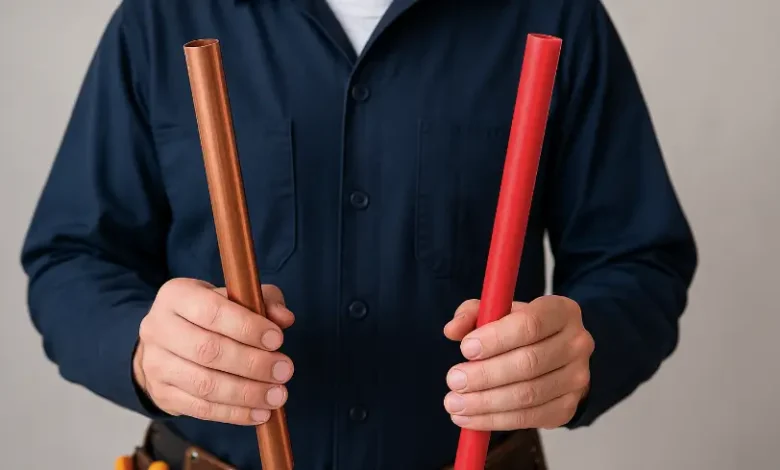
Both materials work. Both are widely used. But they behave differently in Houston’s climate, carry different price points, and come with different long-term outlooks. Here’s a straight comparison so you can make an informed decision before anyone starts cutting into your walls.
Why Pipe Material Actually Matters in Houston
Houston’s environment is harder on residential plumbing than most homeowners realize. High humidity, clay-heavy soil that expands and contracts with rainfall, and the occasional hard freeze create conditions that expose the weaknesses in older pipe systems.


Galvanized steel, which is the material found in most homes built before the 1980s, was never designed to last 40 or 50 years. It corrodes from the inside out, narrows over time with mineral buildup, and eventually fails. Many homeowners in neighborhoods like Katy, Kingwood, and Pearland are still running on pipe systems that are well past their useful life.
When it comes time to replace them, the two dominant options today are copper and PEX-A. Understanding what separates them is the first step toward making the right call.
Copper Pipes: The Traditional Standard
Copper has been the benchmark for residential water supply lines for decades. It’s durable, reliable, and has a track record that spans generations of homes.
What Copper Does Well
- Longevity: Copper can last 50 to 70 years under normal conditions, making it one of the longer-lived pipe materials available.
- Heat tolerance: It handles both hot and cold supply lines without degrading.
- Rigidity: Copper holds its shape, which makes it easier to inspect for damage or leaks at visible joints.
- Biological resistance: Copper has natural antimicrobial properties, which can help slow bacterial growth inside the pipe.
Where Copper Falls Short in Houston
Copper is not without its drawbacks, particularly in this region. Pinhole leaks are a known issue with copper in areas with aggressive water chemistry, and Houston’s municipal water supply, while treated, can still be corrosive enough to accelerate that process over time.
Cost is also a significant factor. Copper prices are tied to commodity markets and have risen sharply over the past decade. A whole-house copper repipe for a mid-size Houston home can run considerably more than the equivalent PEX installation, sometimes 20 to 30 percent higher depending on home size and fixture count.
Copper is also rigid, which means more fittings, more joints, and more potential failure points throughout the system. Every joint is a place where a leak can eventually develop.
PEX Pipes: What’s Changed and Why It Matters
PEX, which stands for cross-linked polyethylene, has been used in European residential plumbing since the 1970s. It gained serious ground in the U.S. market over the past 20 years and is now the preferred material for whole-house repiping across the country.
Not all PEX is the same, though. There are three types: PEX-A, PEX-B, and PEX-C. The differences come down to how the polyethylene is cross-linked during manufacturing, and that process has a significant impact on the pipe’s flexibility, strength, and long-term behavior.
PEX-A: The Premium Option
PEX-A, produced using the Engel method, creates a more uniform molecular structure than PEX-B or PEX-C. The practical result is a pipe that is more flexible, less prone to cracking under stress, and capable of expanding and returning to its original shape without damage.
Uponor PEX-A is the specific product used by specialist repipe crews for exactly this reason. Its expansion fittings create connections that are mechanically stronger than the crimp or clamp fittings used with PEX-B and PEX-C. In a climate where occasional hard freezes can stress a pipe system overnight, that elasticity matters.
PEX-B and PEX-C: A Step Down
PEX-B is widely available and less expensive. It is a reasonable product for repairs and smaller applications. However, it is stiffer than PEX-A and uses crimp fittings that carry a higher failure risk over time. PEX-C is the least flexible of the three and is rarely used for residential repiping.
For a whole-house repipe, especially in a home that will be in service for another 30 or 40 years, PEX-A is the appropriate material. The performance difference is real, and the warranty coverage tied to PEX-A products reflects that.
See also: Essential Lawn Care Tips for Hervey Bay Homeowners
Head-to-Head: How They Compare for Houston Homes
| Factor | Copper | PEX-A |
|---|---|---|
| Typical lifespan | 50 to 70 years | 50+ years (newer material, long projections) |
| Cost | Higher material cost | Lower material cost |
| Freeze resistance | Prone to cracking | Expands and recovers |
| Corrosion resistance | Vulnerable to pinhole leaks | Chemically resistant |
| Flexibility | Rigid, requires more fittings | Highly flexible, fewer joints |
| Installation time | Longer | Faster, fewer connections |
| Water quality impact | Natural antimicrobial | No off-gassing concerns with NSF-certified PEX |
Freeze Performance
Houston does not freeze often, but when it does, the impact can be severe. The 2021 winter storm is a recent reference point. Copper pipes crack under freeze pressure. PEX-A expands and then contracts back to shape, which means it can survive a freeze event that would split a copper line.
That elasticity alone has been enough to shift many Houston homeowners toward PEX-A as the preferred repipe material.
Corrosion Resistance
PEX does not corrode. It is chemically resistant to the kind of mineral buildup and water chemistry that causes pinhole leaks in copper. For homes in areas with harder water, that resistance translates to a longer service life with fewer interruptions.
Water Quality
NSF-certified PEX-A does not affect water taste or introduce contaminants. Some older or lower-grade PEX products raised concerns years ago, but those were addressed through certification standards. Uponor PEX-A carries NSF 61 certification, which is the industry standard for drinking water system components.
What a Copper-to-PEX Repipe Actually Involves
A copper to PEX repipe Houston homeowners typically encounter involves replacing the entire supply line network, from the main water shutoff through every branch that feeds fixtures throughout the house. It is not a patch job. It is a full system replacement.
The process generally looks like this:
- Pre-project assessment: A licensed crew maps the existing pipe layout, identifies the access points needed, and confirms fixture count for accurate pricing.
- Water shutoff: The main supply is shut off while new lines are run. Most specialist crews work in windows of 5 to 6 hours, restoring water before the end of the day.
- Access cuts: Small openings are cut in drywall to route the new lines. The number of cuts depends on home layout and the existing pipe routing.
- New line installation: PEX-A lines are run from the manifold or main shutoff to every fixture, with expansion fittings at connections.
- Pressure testing: The new system is pressure tested before any drywall is closed up. If there is a problem, it is found here, not six months later.
- Drywall repair and paint: Access holes are patched, textured to match the existing wall, and painted. A complete project leaves the walls looking as they did before work began.
One thing worth noting: not every plumbing company includes drywall repair and paint in the project scope. Many homeowners have been left coordinating a separate contractor to restore walls after the plumber finished. A repipe specialist that handles the full scope from pipe replacement through wall restoration eliminates that coordination problem entirely.
Repipe Solutions Inc handles the complete process under one project, including Uponor PEX-A installation, pressure testing, permits, drywall repair, and finish painting, which is a scope structure that a generalist plumber typically cannot match.
Which Material Should You Choose?
For most Houston homeowners replacing an aging galvanized or failing copper system, PEX-A is the more practical choice today. The lower material cost, better freeze performance, corrosion resistance, and faster installation time all point in the same direction.
That said, copper is not a wrong answer. If you have a newer home with an intact copper system and are doing a targeted repair, staying in copper makes sense for consistency. If your system is old, failing, or you are doing a full replacement, PEX-A offers a better value proposition and better long-term performance in this climate.
The most important variable is not the pipe material. It is the quality of the installation and the warranty behind it. A transferable lifetime warranty on a PEX-A repipe is a meaningful protection that stays with the home through ownership changes, which has real value if you plan to sell.
According to the National Association of Realtors, updated plumbing systems are consistently flagged as value-adding improvements during real estate transactions, particularly when documentation and warranty transfers are in place.
Key Takeaways
- PEX-A and copper are both reliable materials, but they perform differently in Houston’s specific climate conditions
- PEX-A offers better freeze resistance, corrosion resistance, and lower material cost than copper for whole-house repipes
- Not all PEX is equal: PEX-A uses the Engel manufacturing method, which produces a more flexible and durable pipe than PEX-B or PEX-C
- A complete repipe should include pressure testing, permits, and drywall repair and paint as part of the project scope, not as separate charges
- Transferable lifetime warranties on PEX-A repipes add measurable resale value and provide long-term peace of mind
Frequently Asked Questions
How long does PEX-A pipe last compared to copper? PEX-A has a projected lifespan of 50 years or more based on accelerated aging tests and real-world installation data from Europe, where it has been in use since the 1970s. Copper can last 50 to 70 years under ideal conditions, but Houston’s water chemistry and climate can shorten that range, particularly in homes where pinhole leaks are already appearing.
Is PEX pipe safe for drinking water? Yes, NSF-certified PEX-A is safe for potable water systems. Uponor PEX-A carries NSF 61 certification, which is the standard for materials in contact with drinking water. There are no off-gassing concerns associated with properly certified PEX-A products.
Will switching from copper to PEX affect my home insurance? In most cases, a repipe from copper to PEX-A does not negatively affect homeowners insurance, and in some cases it may improve your standing by eliminating old galvanized or failing copper lines. Insurers are increasingly interested in the age and condition of plumbing systems during underwriting. Always confirm with your provider after any significant plumbing change.
Does a PEX repipe require permits in Houston? Yes. A whole-house repipe in Houston requires a permit from the relevant municipal authority, and the work must be performed by a licensed plumber. Pressure testing is typically required before walls are closed. Any repipe contractor who suggests skipping permits is creating a liability problem for the homeowner, particularly at resale.
How do I know if my copper pipes are failing before they cause damage? Common signs include pinhole leaks at fittings or along pipe runs, blue-green staining on fixtures or inside the toilet tank, unexplained drops in water pressure, and visible corrosion at exposed pipe sections. If any of these are present in a home that is 25 years or older, a full system assessment is worth scheduling before the next leak forces the issue.
Conclusion
Choosing between PEX and copper is not a difficult decision once you understand what each material actually does in the conditions your home faces. For a Houston home going through a full repipe, PEX-A is the material most specialist crews recommend, and for good reason. The performance advantages in this climate are real, the cost difference is meaningful, and the warranty coverage available with a properly installed PEX-A system is something copper simply cannot match at the same price point.
If you are weighing your options or trying to figure out whether your current pipe system is worth saving, the most useful next step is a no-obligation assessment from a crew that does this work every day and can give you a clear picture of what you are dealing with.