
Many individuals never attempt whitening procedures because they suffer from tooth sensitivity. Whether it was a negative encounter with a drugstore strip or the belief that whiter teeth equate to days of pain, those statements are not entirely accurate.
With proper preparation and the correct procedure, even patients with truly sensitive teeth can whiten their teeth with great success and minimal discomfort.
What’s Actually Causing The Sensitivity
The reason whitening makes your teeth sensitive? The nerve endings in your dentin tubules are triggered by the peroxide. Most general sensitivity during whitening is caused by dentin hypersensitivity, in which the microscopic tubules in your dentin become exposed to external stimuli – and run straight to the nerve. When the bleaching agent hits these tubules, your nerve fires.
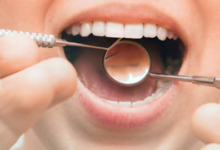
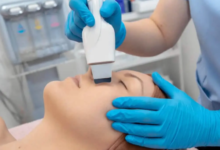
Two main culprits of exposed dentin are enamel erosion and gingival recession. Thinned enamel means less insulation between the surface of your tooth and the tubules. Receding gums expose the root-dentin complex, which, unlike enamel, is not even technically a mineral. It’s cementum, a hard tissue that doesn’t protect the tooth as well as enamel does. This is why dentists slap on that fluoride coating after your cleaning – it helps plug up the tubules.
Pre-Conditioning Makes a Measurable Difference
Many people will just pop a painkiller an hour before their whitening treatment and hope for the best. But taking a proactive approach to preparation pays off. Even good whitening procedures won’t be worth it if they’re painful or leave you with sensitive teeth for days afterwards.
Starting a sensitivity-reducing toothpaste two weeks before your appointment can make a meaningful difference. These toothpastes work by blocking the tiny tubules in your dentinal layer that transmit pain signals, but they need time to build up and take effect. Swapping your regular toothpaste out isn’t a dramatic change, but the payoff during and after treatment can be significant.
This is where your dentist can also play a role. A professional fluoride application at a check-up beforehand strengthens enamel and reduces nerve reactivity. It’s worth having that conversation rather than walking into a whitening session with no baseline protection in place.
Why Professional Treatment Handles Sensitivity Better
Over-the-counter strips and generic trays are problematic for two reasons. The trays don’t fit your mouth perfectly, so the whitening gel seeps onto your gum tissue. Gums should never be in contact with hydrogen peroxide at a sufficient concentration. Second, you’re utilizing a set concentration regardless of your tolerance level.
That’s why if your teeth are quite sensitive, you should consider professional teeth whitening at a dentist rather than sampling something from the store. A clinician will apply a physical resin barrier to prevent gum damage before applying the gel. Small trays, produced from the unique shape of your teeth, ensure the bleaching substance stays in place. The concentration of hydrogen peroxide or carbamide peroxide is based on how sensitive your teeth are first, not a general number that worked for a different patient.
When sensitivity is already a concern, handing that decision to a trained professional rather than a product label is simply the more sensible call.
See also: Best Generic Medicine Company in India: Driving Affordable & Quality Healthcare
Gradual Beats Intense For Sensitive Patients
It is often believed that the most effective way to whiten teeth is through a single high-intensity treatment. While this might be the case for patients who do not have a history of sensitivity, a slower approach often yields better results with less pain and sensitivity for everyone else.
Teeth whitening gels containing lower concentrations of carbamide peroxide applied over the course of a few weeks are much gentler on pain-triggering nerve endings than a single, high-intensity treatment. Carbamide peroxide also releases its active ingredient at a much slower rate than hydrogen peroxide. This gives the tooth an opportunity to rest between gel applications and recover from any dehydration that can cause those classic zingers for patients with sensitivity.
LED light does accelerate the process in the chair and under home whitening, but any great dentist will optimize rather than maximize its use in order to avoid over-exposing the tooth. The important thing is to find your tolerance threshold and stick to just beneath it. A simple shade guide will give the dentist an objective starting point and quantify the improvement, rather than them guessing and charging you for repeat treatments.
The 48 Hours After Treatment Matter More Than Most People Realise
You may experience post-operative sensitivity – those brief sharp “zings” after whitening – because the bleaching process causes a small, temporary increase in enamel porosity. These pores close back up within 48 hours, but during that window, washes, baths, and acidic drinks will sensitise your newly-exposed nerve.
The answer is really straightforward: acidic on an open nerve hurts. Give your tooth two days without it. Coffee, fizzy drinks, and anything citrus and vinegar-based should be avoided, but only for two days. It won’t “stain” your results. It will, however, cause your now-sensitised nerve to go off like a 4th of July firework.
Stick to a “white diet” during this time, and you’ll be fine. No-one ever died from a 48-hour coffee fast, and you won’t be the first.